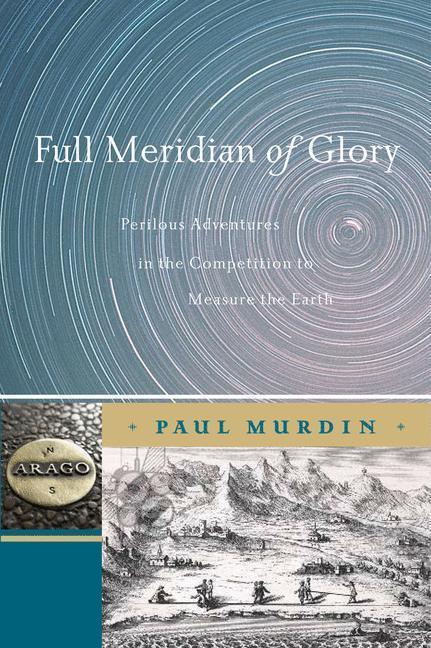
[the text below needs editing and we must be careful not to say things about Dan Brown's book that could get Springer in legal trouble] Dan Brown's novel, The Da Vinci Code, was first published in 2003; its sales have reached 40 million worldwide. The book mixes a small spice of fact into a large dollop of fiction to create an entertaining novel of intrigue, adventure, romance, danger and conspiracy, which have been imaginatively worked together to cook up the successful bestseller. Most interest in the book's origins has centred on the sensational religious aspects. Dan Brown has written: 'All of the art, architecture, secret rituals, secret societies, all of that is historical fact.' This gives an air of authenticity to the book. Brown has, however, made up the religious doctrines, or based them on questionable accounts by others. The locations of the actions of The Da Vinci Code are not, however, made up. The present book is the scientific story behind the scene of several of the book's actions that take place on the axis of France that passes through Paris. The Paris Meridian is the name of this location. It is the line running north-south through the astronomical observatory in Paris. One of the original intentions behind the founding of the Paris Observatory was to determine and measure this line. The French government financed the Paris Academy of Sciences to do so in the seventeenth to nineteenth centuries. It employed both astronomers - people who study and measure the stars - and geodesists - people who study and measure the Earth. This book is about what they did and why. It is a true story behind Dan Brown's fiction. This is the first English language presentation of this historical material. It is attractively written and it features the story of the community of scientists who created the Paris Meridian. They knew each other well - some were members of the same families, in one case of four generations. Like scientists everywhere they collaborated and formed alliances; they also split into warring factions and squabbled. They travelled to foreign countries, somehow transcending the national and political disputes, as scientists do now, their eyes fixed on ideas of accuracy, truth and objective, enduring values - save where the reception given to their own work is concerned, when some became blind to high ideals and descended into petty politics. To establish the Paris Meridian, the scientists endured hardship, survived danger and gloried in amazing adventures during a time of turmoil in Europe, the French Revolution and the Napoleonic War between France and Spain. Some were accused of witchcraft. Some of their associates lost their heads on the guillotine. Some died of disease. Some won honour and fame. One became the Head of State in France, albeit for no more than a few weeks. Some found dangerous love in foreign countries. One scientist killed in self defence when attacked by a jealous lover, another was himself killed by a jealous lover, a third brought back a woman to France and then jilted her, whereupon she joined a convent. The scientists worked on practical problems of interest to the government and to the people. They also worked on one of the important intellectual problems of the time, a problem of great interest to their fellow scientists all over the world, nothing less than the theory of universal gravitation. They succeeded in their intellectual work, while touching politics and the affairs of state. Their endeavours have left their marks on the landscape, in art and in literature.
Paul Murdin is the Treasurer of the Royal Astronomical Society and Professor of Astronomy at Cambridge University |